
On this page
The short answer
ATMs took cash and deposits from tellers, and spreadsheets took the hand math from accountants. Teller jobs held for about thirty years, then fell as branches closed and banking moved online. Accountants kept their share of US jobs while bookkeeping clerks shrank. With AI, the people who gain build what it can't do yet, and keep rebuilding as that line moves.
If AI can do the part of your job you're proudest of, what's left for you?
It's a fair question, and it isn't new. Bank tellers faced it when ATMs started handing out cash. Accountants faced it when spreadsheets started doing the math.
Both stories have useful answers. Here's my read. AI will replace tasks. AI will reshape roles. AI will expose people whose value is only tied to repeatable task execution.
The machine takes the task. The people who come out ahead build what it can't copy, use it to amplify the rest, and keep rebuilding as the line moves. So the useful question is what you build next.
The tellers and the accountants show how that plays out, including the part where doing everything right wasn't enough.
Did ATMs replace bank tellers?
No. ATMs showed up in the US in the 1970s and took over "some of the most common tasks bank tellers performed, such as dispensing cash and taking deposits." The teller job held anyway.
That's how James Bessen, an economist who studies how automation changes jobs, described it for the International Monetary Fund in 2015. And yet, he wrote, "the number of bank teller jobs did not decrease as the ATMs were rolled out."
The branches explain it. In the average urban market, tellers per branch fell from 20 to 13 between 1988 and 2004. But urban bank branches increased 43%, helped along by a wave of bank deregulation, so there were more branches to staff.
The job moved, too. "Cash handling became less important and human interaction more important," Bessen wrote, and tellers became part of the "relationship banking team."
That first part is repeating right now. Generative AI is taking the cash drawer of a lot of office work: the first draft, the summary, the meeting notes, the slide outline.
If the teller story ended there, it'd be an easy one to tell.
Source: James Bessen, IMF Finance & Development, 2015; US Bureau of Labor Statistics, Occupational Employment and Wage Statistics, May 2016 and May 2025
It didn't end there. Teller jobs fell by about a third from 2016 to 2025, according to Bureau of Labor Statistics employer surveys. (BLS warns that survey isn't built for tracking change over time, so read "about a third" loosely. The direction is clear.)
BLS says teller jobs grew historically because branches expanded. Now branches are shrinking, online banking means fewer visits to the window, and newer automation is expected to mean fewer tellers per branch.
And the tellers who made the move weren't spared. An analysis by the Burning Glass Institute, a labor market research group, found that new relationship and universal banker roles that paid nearly $70,000 in the early 2010s now pay a median of around $52,000.
That's the hard part of this story. Moving toward the customer kept the job alive while branches grew. When the branches started closing, demand for the whole role fell, and the move didn't protect it.
Same with AI. Moving toward the work a tool can't do helps for as long as people need that work. When the line moves again, you move again.
So what if you did everything right and still got squeezed? Picture a blank whiteboard. If you were building the career, the job or the role you'd want for the next five, ten years, what would you start learning? What would you start doing?
I call it a reset opportunity. Maybe you're in a role you don't want, and you'd like to learn something new or do something differently. This is the best chance you'll get to use this technology to reskill, and it doesn't have to be in AI.
Staying put because you're doing everything right gets harder when the job itself is moving. Maybe your job changes. Maybe your skills change. Maybe your opportunities change.
That's hard, especially if you'd rather someone handed you the next step. It's also a bunch of freedom to decide what you want to do, and AI can help you get there.
Did spreadsheets replace accountants?
No. Spreadsheets took the hand math, and the accountant's work moved toward analysis and advice.
The electronic spreadsheet came out around 1980. NPR reporter Jacob Goldstein talked with accountant Allen Sneider, who saw the change up close. With a spreadsheet, Sneider said, "You could play the what-if game, you know, what if I did this instead of that?"
As Goldstein put it, "Software made answering questions like these cheap and easy. Accountants became more valuable." And "people started asking accountants like Sneider to do more."
That's one accountant's story. The job numbers point the same way, with a catch.
Out of every 10,000 US jobs (Current Population Survey)
See the numbers
| Out of every 10,000 US jobs (Current Population Survey) | |
|---|---|
| Clerks, 1983 (bookkeeping, accounting and auditing clerks) | 195 |
| Clerks, 1998 | 131 |
| Clerks, 2025 (down by more than half) | 77 |
| Accountants, 1983 (accountants and auditors) | 110 |
| Accountants, 1998 (up through the 1990s) | 123 |
| Accountants, 2025 (then back down) | 108 |
Source: US Bureau of Labor Statistics, Current Population Survey, via the Statistical Abstract of the United States 1999 (Table 675) and 2025 annual averages (Table 11). Occupation definitions changed several times since 1983. 2025 figures are 11-month averages that exclude October 2025.
The Current Population Survey, the government's monthly survey of households, shows the split. Bookkeeping, accounting and auditing clerks fell from about 2% of all US jobs in 1983 to under 1% in 2025. Accountants and auditors gained share through the 1990s, then gave it back, ending close to where they started.
Spreadsheets were one force among several, alongside accounting software, cloud bookkeeping and offshoring. Together they shrank the routine layer of the work.
That part lines up with AI. AI makes analysis nearly free. So the analysis stops being the value. The scarce thing now is the judgment to know which answer to trust.
Spreadsheets made the what-if cheap. Generative AI goes further. It can run the scenarios, draft the memo and suggest an answer, which is right where this history stops lining up.
Where does the comparison to AI break?
At judgment. A cash withdrawal follows rules, and so does recalculating a column. ATMs and spreadsheets couldn't decide which risk matters or what a client really needs, and AI does some of that work now.
That changes who gets the boost. In a study of 5,172 customer-support agents at one company, Stanford economist Erik Brynjolfsson and two colleagues found AI assistance raised productivity 15% on average, and about 30% for less experienced and lower-skilled agents.
The most experienced and highest-skilled agents saw "small gains in speed and small declines in quality." That's good news for new hires and a warning for experts. If a tool can hand a newer person some of what you learned over years, years alone stop being the advantage.
It cuts the other way, too. I call it the Expertise Cliff, and it's about tomorrow's experts. When AI does the entry-level reps that used to build judgment, juniors can turn out senior-level work without senior-level judgment, and they can't catch the tool's mistakes.
So here's the lesson I'd carry over from the tellers and the accountants. The value moves to the part of the work the machine can't do reliably yet. With AI, that line keeps moving, so finding it once won't hold you for long.
What makes your work harder to copy now?
I think the people who become more valuable are the ones experimenting. The curious ones. The ones who say, "Okay, cool, this is what I can do with it. Well, what else?"
They push the limits. They invest the time to play and see what it can do, and they don't let what they've always done decide what they can do next.
Then there's the next level. Those people connect their experiments, what they've learned and the skills they're stacking, and tie them to real problems. In their own world, in their organization or outside it.
The bigger the problem I'm solving, the more valuable it is.
The accountants show it. Spreadsheets let Sneider play the what-if game, and people started asking him to do more. AI can open the same door, as long as you go looking for the bigger problem.
Here's what that looked like for me. When AI took over tasks I was proud of doing well, I found new things to experiment with. I kept asking, what else can I do now?
Then I asked a harder one. What are the things I should be doing that I don't want to be doing? I went after those with AI's help. I started experimenting more, learning more and trying different things.
You control that part. Build what AI can't copy, and use it to amplify the rest. AI is the practice partner that gets you there faster.
In a normal week, that can look like this:
- Take a task AI now does for you, and notice what it freed up.
- Spend some of that time on an experiment, like a tool you haven't tried or a skill you've been meaning to learn. Then ask, what else?
- Pick something you've been avoiding, and see how AI could help you tackle it.
- Tie what you're learning to a real problem, on your team, for a client or in your own world. Then look for a bigger one.
What this means for you
Machines keep taking tasks. ATMs took the cash drawer, spreadsheets took the hand math, and AI is taking drafts, summaries and first-pass analysis right now.
The tellers and the accountants show where the value goes next: to the work around the task that the machine can't do yet. They also show the line moves, and a move that worked for one decade may not carry you through the next.
So grab the blank whiteboard. What do you want to be doing five, ten years from now? And what do you want to start learning today?
The machine takes the task. You decide what you build next.
Key takeaways
- ATMs took cash and deposits, but banks opened more branches, so teller jobs held for about thirty years while the work moved toward customers.
- Teller jobs fell by about a third from 2016 to 2025 as branches closed, and the tellers who moved into relationship roles weren't spared.
- The bookkeeping clerk layer shrank by more than half as a share of US jobs, with spreadsheets one force among several. Accountants gained share through the 1990s, then fell back to about where they started.
- AI reaches into judgment work in a way ATMs and spreadsheets never could, and in early studies it helps the least experienced most.
- The people who gain experiment, keep asking "what else?", tie what they learn to bigger problems, and keep rebuilding as the line moves.
Questions
Did ATMs reduce the number of bank teller jobs?
No. MIT economist David Autor reports US teller employment rose modestly from about 500,000 to about 550,000 between 1980 and 2010, even as tellers fell as a share of all jobs, because banks opened more branches, helped by deregulation. Teller jobs have fallen by about a third since 2016, as branches close, banking moves online and newer automation spreads. That figure comes from a BLS survey that isn't built for tracking change over time, so read it loosely. The direction is clear.
Are bank teller jobs disappearing?
They're shrinking. The Bureau of Labor Statistics counts 339,200 teller jobs in 2025 and projects a 13% decline by 2035, citing fewer branches, online banking and more automation inside branches. An analysis by the Burning Glass Institute found teller employment down nearly 30% since 2010, postings down almost two-thirds, and only 4% of tellers moving into higher-paying roles like loan officer. That analysis doesn't name the base or time window behind the 4%, or the series behind its employment figure, so don't read it alongside the BLS numbers as one trend.
Did tellers who moved into relationship roles do better?
Not by much on pay. The Burning Glass Institute found that new relationship and universal banker roles that paid nearly $70,000 in the early 2010s now pay a median of around $52,000. It doesn't say whether those figures are adjusted for inflation. Moving toward the customer kept the teller job alive while branches grew, and it didn't protect the role once branches started closing.
What happened to bookkeeping clerks?
Their share of US jobs fell from about 1.95% in 1983 to about 0.77% in 2025, in Current Population Survey data. NPR's Planet Money reported that since 1980, 400,000 bookkeeping and accounting clerk jobs went away while 600,000 accounting jobs were added, though NPR didn't name its data source. Clerk jobs typically ask for some college and accountant jobs a bachelor's degree, so it's likely many clerks didn't simply become accountants. That's an inference, and no source here tracks individual moves.
Does AI help experienced workers as much as beginners?
Not in the early studies. In a study of 5,172 customer-support agents at one company, AI assistance raised productivity 15% on average and about 30% for less experienced and lower-skilled agents, while the most experienced saw small gains in speed and small declines in quality. In a study of Boston Consulting Group consultants, those using GPT-4 finished 12.2% more tasks, 25.1% faster, with significantly higher-quality work on tasks inside AI's frontier, and were 19 percentage points less likely to get the right answer on a task outside it. Both are single firms, the consultants were early in their careers, and the outside-the-frontier result rests on one task.
Will AI replace experts?
Nobody knows yet, and the early data is mixed. Employment of 22- to 25-year-olds in the most AI-exposed jobs is now about 19% below where it would be if it had kept pace with less-exposed peers, up from 15% a year earlier on the same measure, while experienced workers show no comparable gap. The authors find no evidence of economy-wide displacement and call these early, descriptive indicators, not causal estimates. History says machines take tasks first. The people who gain build what AI can't do yet and keep rebuilding as that line moves.
Sources
See all 15 sources
- James Bessen, "Toil and Technology," Finance & Development (International Monetary Fund), March 2015 Link
- David H. Autor, "Why Are There Still So Many Jobs? The History and Future of Workplace Automation," Journal of Economic Perspectives 29(3), 2015, pp. 6 to 7 Link
- US Bureau of Labor Statistics, Occupational Outlook Handbook, "Tellers," last modified August 27, 2026 Link
- US Bureau of Labor Statistics, Occupational Employment and Wage Statistics, Tellers (43-3071), May 2016 Link
- US Bureau of Labor Statistics, Occupational Employment and Wage Statistics news release, Table 1, May 2025 Link
- Katherine Townsend Kiernan, "The Case of the Vanishing Teller," Burning Glass Institute, May 12, 2025 Link
- Jacob Goldstein, "How The Electronic Spreadsheet Revolutionized Business," NPR All Things Considered, February 27, 2015 Link
- David Kestenbaum and Jacob Goldstein, "Episode 606: Spreadsheets!", NPR Planet Money, February 25, 2015 Link
- US Census Bureau, Statistical Abstract of the United States 1999, Table 675, "Employed Civilians, by Occupation, Sex, Race, and Hispanic Origin: 1983 and 1998" (BLS Current Population Survey) Link
- US Bureau of Labor Statistics, Current Population Survey, 2025 annual averages, Table 11, released February 20, 2026 Link
- US Bureau of Labor Statistics, Occupational Outlook Handbook, "Accountants and Auditors," last modified August 27, 2026 Link
- US Bureau of Labor Statistics, Occupational Outlook Handbook, "Bookkeeping, Accounting, and Auditing Clerks," last modified August 27, 2026 Link
- Brynjolfsson, Li and Raymond, "Generative AI at Work," Quarterly Journal of Economics 140(2), May 2025 Link
- Dell'Acqua et al., "Navigating the Jagged Technological Frontier," Organization Science 37(2), 2026 Link
- Brynjolfsson, Chandar and Chen, "Canaries in the Coal Mine? Six Facts about the Recent Employment Effects of Artificial Intelligence," Stanford Digital Economy Lab, August 2026 revision Link
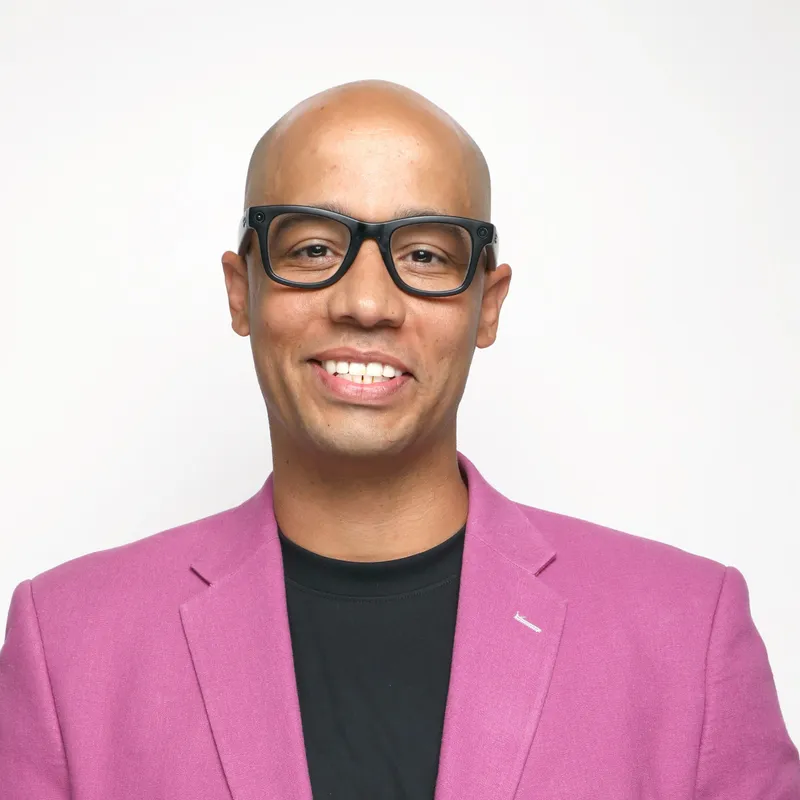
Jordache Johnson
Jordache Johnson is a Technology Adoption Strategist, Executive AI Advisor, and International Keynote Speaker. He helps leaders and professional audiences understand what AI makes possible, put it to work, and strengthen the human judgment that guides its use.
He created 20 proprietary frameworks that help people adopt new technology, and he builds what he teaches: he runs his own business on an AI operating system he architected himself. He’s worked with organizations across industries, from 20-person teams to 30,000-employee organizations, and he’s spoken across North America, the United Kingdom, Europe, and Central America.
His promise: AI transformation that makes you MORE valuable, not less.